Recent legislation passed in Indiana is raising serious concerns across the public safety and building technology communities, and for good reason.
Two bills approved by the Indiana General Assembly will significantly alter how building and fire safety codes are managed in the state. Among the most impactful changes:
- The elimination of the Fire Prevention and Building Safety Commission
- A freeze on nationally recognized safety codes (including I-Codes, NEC, fire alarm, and sprinkler standards) at outdated versions
- A ban on ERCES (Emergency Responder Communication Enhancement Systems), which ensures first responders have radio coverage inside buildings
- Removal of AFCI requirements, a widely adopted electrical safety measure
These changes take effect July 1, 2026.
Why This Matters
At a high level, this is about more than code updates—it’s about how safety decisions are made and implemented.
Modern building safety codes are designed to evolve alongside technology, materials, and real-world incident data. Freezing them in time introduces risk by preventing the adoption of improvements that protect both occupants and first responders.
The Impact on First Responder Communication
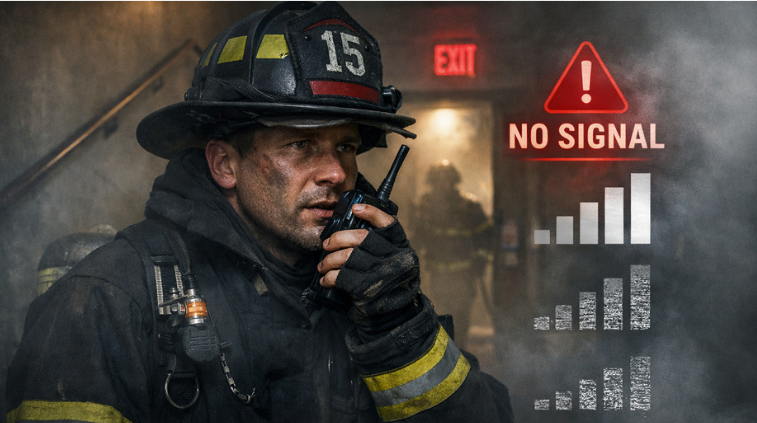
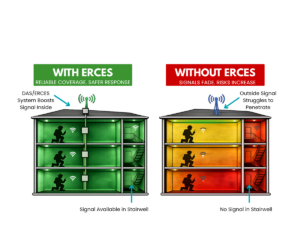
One of the most concerning elements is the prohibition of ERCES. In-building radio coverage is not a convenience—it’s critical infrastructure. First responders rely on consistent communication when operating inside structures where signals are often degraded or completely lost.
Without these systems:
- Firefighters may lose communication in stairwells, basements, or large structures
- Coordination during emergencies becomes more difficult
- Response times and outcomes can be negatively affected
This is not a theoretical issue. Reliable in-building communication has been a growing focus across the country precisely because of its role in improving emergency response.
A Shift in Control
Another key change is that future updates to building and safety codes will now require approval by the state legislature, rather than being managed by technical experts and code bodies. This introduces a new layer of complexity (and potential delay) into the process of adopting updated safety standards. For Authorities Having Jurisdiction (AHJs), this also represents a loss of local control, as local ordinances are preempted under the new law.
Why This Extends Beyond Indiana
While these changes are specific to Indiana, they may signal a broader trend. Code adoption and enforcement have long been grounded in national standards developed by subject matter experts. If similar approaches are adopted elsewhere, it could lead to fragmentation in safety requirements across states. For organizations involved in building design, public safety, and communications infrastructure, consistency in codes is critical.
What Happens Next
With these changes taking effect in July 2026, the immediate focus is on awareness and discussion—particularly among those in the fire service, code enforcement, and building technology sectors. Events like FDIC provide an important forum for these conversations.
Our Perspective
At Alliance, we believe safe buildings must support reliable communication for first responders.
In-building communication systems like ERCES play a critical role in ensuring that emergency personnel can do their jobs effectively and safely. As this situation evolves, it’s important for industry stakeholders to stay informed, engage in the conversation, and advocate for solutions that prioritize life safety.
Learn More
A detailed briefing on the legislation and its implications is available from Safer Buildings Coalition.
Read full briefing here: https://news.saferbuildings.net/indiana-legislation
Download FDIC Fact Sheet
April 15th, 2026