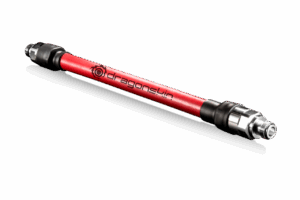

RFS Technologies CELLFLEX RF Feeder Cable
RFS Technologies CELLFLEX RF Feeder Cable
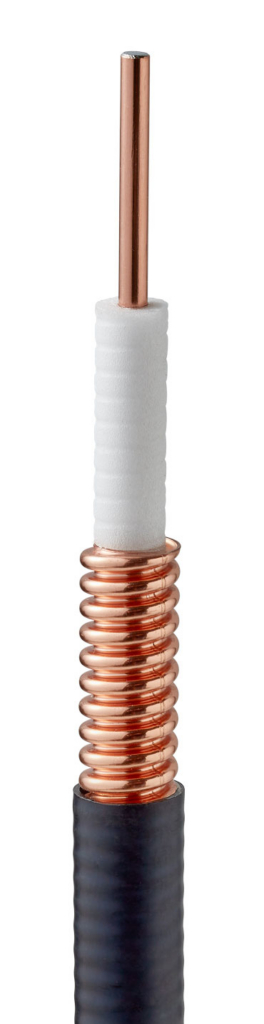
CELLFLEX® RF feeder cables are low-loss corrugated coaxial transmission lines designed for reliable RF signal transmission in wireless infrastructure such as cellular base stations, broadcast antennas, and in-building communication systems. They combine foam dielectric insulation, strong shielding, and flexible construction for long-distance and high-power RF connectivity.
Key Benefits
- Low attenuation → preserves signal strength over long distances
- High power handling → suitable for cellular and broadcast transmitters
- Excellent shielding → reduces RF interference and signal leakage
- Flexible but durable design → easier installation than rigid waveguide
- Low Passive Intermodulation (PIM) → important for modern cellular networks (4G/5G)
Top Sellers
| SCF14-50J | 1/4″ CELLFLEX Superflexible Foam-Dielectric Coaxial Cable |
| LCF12-50J | 1/2″ CELLFLEX® Low-Loss Foam-Dielectric Coaxial Cable |
| LCF78-50JA | 7/8″ CELLFLEX® Premium Attenuation Low-Loss Foam-Dielectric Coaxial Cable |
| UCF114-50JA | 1-1/4″ CELLFLEX® Premium Attenuation Ultraflexible Low-Loss Foam-Dielectric Coaxial Cable |
Typical Specifications
(Example based on common 1/2″ CELLFLEX cable)
| Parameter | Typical Value |
| Impedance | 50 Ω |
| Maximum Frequency | up to ~8.8 GHz |
| Velocity Factor | ~87% |
| Capacitance | ~76 pF/m |
| PIM Performance | ~ -160 dBc |
| Power Handling | up to ~38 kW peak |
| Jacket | Polyethylene (indoor/outdoor options) |
Available Cable Sizes
CELLFLEX feeder cables come in multiple diameters depending on power and distance:
| Size | Typical Use |
| 1/4″ | Jumpers, short connections |
| 3/8″ | Small RF systems |
| 1/2″ | Indoor DAS / small base stations |
| 7/8″ | Macro base stations |
| 1-1/4″ | High-power RF transmission |
Larger cables → lower signal loss but heavier and harder to install.
Frequency Range
Typical operating ranges depend on cable size:
| Cable Size | Typical Max Frequency |
| 1/4″ | up to ~20 GHz |
| 1/2″ | up to ~8–10 GHz |
| 7/8″ | ~6 GHz |
| 1-1/4″ | ~3–4 GHz |
Transmission Line Type
- Coaxial transmission line
- Corrugated copper or aluminum outer conductor
- Foam dielectric insulation
- 50-ohm characteristic impedance
Common Connector Types
Typical connectors used with CELLFLEX cables:
- N-type connectors
- 7/16 DIN connectors
- 4.3-10 connectors
- EIA flange connectors (large cables)
These connectors maintain impedance and shielding for RF transmission.
✅ Typical Applications
- Cellular base stations
- Distributed Antenna Systems (DAS)
- Broadcast antennas
- Microwave equipment connections
- Public safety communication systems
Please fill out the form for the model you are interested in, and we will contact you as soon as possible!
Plenum Coax Cables
RFS Technologies ClearFill®Line
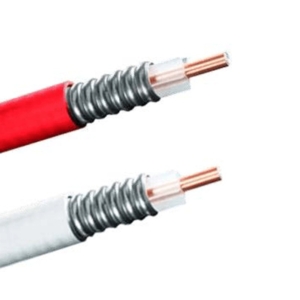
RF Factory-Fit Jumper
RFS Technologies CELLFLEX® Factory‑Fit & ClearFill®Line
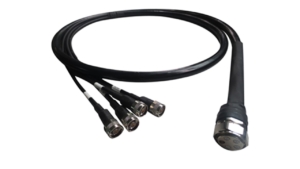
CELLFLEX RF Feeder Cable
RFS Technologies CELLFLEX RF Feeder Cable
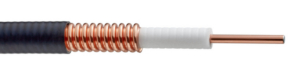
RADIAFLEX® RF Feeder Cable
RFS Technologies RADIAFLEX® RF Feeder Cable
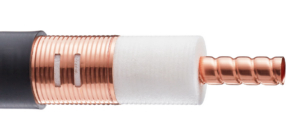
RADIAFLEX Connectors & Accessories
RFS Technologies CELLFLEX RF Feeder Cable
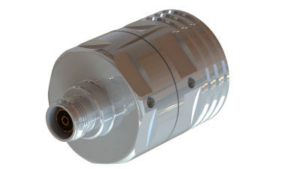
Air Dielectric Cable [HCA] High Power RF Air Cable
RFS Technologies' air dielectric cables are air filled coaxial cables which consist of an inner conductor and an outer conductor
![Air Dielectric Cable [HCA] High Power RF Air Cable](https://www.alliancecorporation.ca/wp-content/uploads/2026/03/hca158-50jplb-300x300.png)
FLEXWELL® Premium Elliptical Waveguide
RFS Technologies FLEXWELL® elliptical waveguide is constructed of longitudinally continuous seam welded, highly conductive copper tube, corrugated and precision formed into an elliptical cross section.
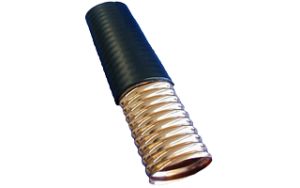
HYBRIFLEX Optical Fiber & Power Cables – Hybrid
RFS Technologies - Custom Hybrid Cables Available
Dragon Skin System
RFS Technologies coaxial cable certified under UL 2196